In India, Publicis Media leads in both new wins & retentions: Publicis Media's LD
FMCG, BFSI and fintech are driving festive advertising momentum, while brands increasingly prioritise measurable returns, digital, CTV and commerce-led campaigns, says Lalatendu Das
 by
by
Published: Oct 14, 2026 8:36 AM | 14 min read
 Follow Us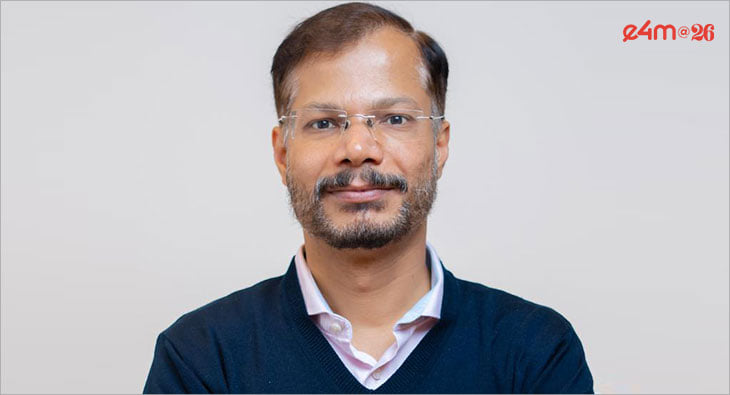

- Publicis Media has emerged as a leading agency group in India, securing significant account wins and reporting $157 million in net new business billings in the first half of 2026, driven by integrated capabilities and a focus on client growth.
- The advertising market is experiencing cautious optimism for the festive season, with spending expected to match or exceed last year's levels, particularly in sectors like FMCG, fintech, and retail, despite uncertainties and a shift towards demanding measurable returns on investments.
- Trends in advertising include an increased focus on digital spending, the integration of paid and influencer marketing, and the growing significance of connected TV (CTV) as a medium that combines large-screen experiences with digital capabilities.
- Looking ahead to 2027, Publicis Media anticipates continued growth in advertising spends, with clients planning higher budgets, although market uncertainties remain a concern.
With a string of significant account wins and advertising spends showing signs of resilience despite market uncertainties, Publicis Media is betting on integrated capabilities and a sharper focus on client growth to sustain its momentum.
In an exclusive conversation with exchange4media, Lalatendu Das, CEO, Publicis Media, South Asia, popularly known as LD in the advertising ecosystem, discusses the network’s recent wins, the cautious optimism surrounding festive advertising and why brands are increasingly demanding measurable returns on their investments.
From the growing influence of CTV and commerce-led advertising to the evolving role of influencers and the outlook for 2027, LD shares his perspective on where India’s advertising market is headed.
Edited excerpts:
Let me begin with new business. COMvergence assessed 62 account moves and retentions in India during H1 2026, representing an estimated $838 million in media spend. Against this backdrop, Publicis Media emerged as the leading agency group in India, while also taking the top spot globally in COMvergence’s H1 new-business rankings. What is driving this momentum for Publicis?
First, I would like to set the record straight on the COMvergence report because I think there has been some misrepresentation in how the numbers are interpreted and presented.
COMvergence reports two distinct metrics: new business including retentions, and net new business excluding retentions. I believe the latter is a more meaningful measure because it reflects the actual new business an agency brings in. Retentions are accounts you already have and have managed to extend.
Publicis Media is number one in India on both parameters. But the distinction becomes particularly significant when you look at net new business, excluding retentions. In the first half of 2026 alone, Publicis Media brought in $157 million in net new business billings.
The industry often tends to focus on new-business figures that include retentions because those numbers appear more substantial. But there is a fundamental difference between retaining an existing account and winning genuinely new business. If you want to assess an agency's actual new-business momentum, you need to look at the latter.
As for what is driving our performance, I think it is largely the result of structural interventions and investments we have made over the past three to four years.
Our operating structure is built around Publicis Groupe as the overarching holding company, with Publicis Media functioning as the central media entity. We make investments centrally through Publicis Media, which then support our four agency brands: Starcom, Zenith, Performics and Spark Foundry.
Each of these agencies has its own niche and strengths. It is therefore not about any one agency winning business, but about the collective strength of the network. The whole is greater than the sum of its parts, particularly when you consider the shared learnings and capabilities across the four agencies.
Congratulations on the recent Raymond Lifestyle win.We are also seeing clients consolidate more capabilities with fewer partners Raymond itself brings creative, media, performance, CRM, digital and technology together. Is this becoming a larger industry trend?
Let’s start with Raymond. At Publicis, we have something called the Power of One.
Historically, agencies have been very function-specific. Somebody is a creative agency, somebody is a digital agency, a media agency or something else. But in the process, I feel networks have forgotten what the client actually needs. What is the need of the brand? Clients are not necessarily saying, give me just media or just creative. They are trying to solve a growth problem.
At Publicis, we make an attempt to understand the brand objectives and growth objectives and then bring together all the relevant facets of the network, depending on what is needed.
In the case of Raymond, we brought in creative thinking through Saatchi & Saatchi, the media power of Zenith and the performance aspect through Performics. There is also an intelligent creativity aspect, where we create assets at scale.
So, it was never about saying we are going to do just a media pitch or a creative pitch. We asked, what is your growth objective? Where are you in the brand's growth journey? Based on that, here are the five things we believe are important to you, and let's bring them all together to deliver.
I think that is something Publicis does better than others.
If you look at L'Oréal, it is about integrating mainline awareness, media and commerce. In the case of Flipkart, we brought together media, digital, biddable, high-impact properties and integrations. And when I say Flipkart, I mean Flipkart, Myntra and the entire group.
Then there is Tata Consumer, where we made an entry there through commerce, where we do a lot of commerce-related work. Another example is Dhan, the fintech player, where we are working purely on performance.
So, as I said, it is industry-agnostic. We are large enough to have a presence across industries. But I think the differentiator, coming back to your question, is that we start with the brand objective and the growth problem the business is trying to solve. We then identify which agency and which capability within the network we should bring in to offer a cohesive solution.
I think that approach is what is bearing fruit.
Coming to festive advertising, how strong is the market this year compared with last year? Are you seeing a meaningful increase in budgets, and which sectors are really driving the growth?
I think we are way past the question of who is digital and who is not. Everybody is pretty much digital now, so I would move past that.
But I think what we are seeing is cautious optimism. This year, as you know, has been marred by a lot of uncertainties. It is not that brands don't want to spend, but the questions are increasingly around ROI. If I am putting in this money, what do I get in return? People are a little hesitant to make large capital outlays.
At the same time, if you look at the other side of the story, there is a lot of pent-up demand that remains unaddressed because consumers have been conservative throughout the year. We believe the festive season could unlock some of that consumer spending and purchasing power.
So, planning is in full swing. We are seeing spending estimates at least at par with last year and haven't seen any dip per se. It may even go up because we are still in the early part of the season.
In terms of sectors, the usual suspects, CPG and FMCG, are going heavy. But we are also seeing a lot of interest from fintech and the broader BFSI sector. Auto is steady. With the GST cuts, the sector saw a big uplift last year, so it is more about maintaining that momentum.
FMCG, CPG, BFSI and particularly fintech are showing good momentum. We are also seeing a lot of activity in the retail sector, with the big festive sales events getting underway, whether it is Myntra's sales or Flipkart's Big Billion Days.
So, I think the best way to summarise the sentiment is cautious optimism. Brands are looking to put money into the market, but there is a much sharper focus on the returns they can generate.
Gaming had emerged as a substantial advertising category before the regulatory changes altered the market. How visible is the absence/reduction of gaming money this festive season?
There was definitely a void left by the gaming sector. But if you look at overall industry advertising spends, they have actually grown compared to last year, even without the contribution from gaming companies. So, I would say that the gap has been largely compensated for by other players.
There are also a lot of startups entering the advertising market, while many existing advertisers have increased their media and advertising budgets by upwards of 20%.
So, overall spending is growing. Had gaming companies continued spending, the growth could have been even higher. But we are not seeing any dip as such.
Where is the incremental festive rupee actually going this year?
As you know, it is horses for courses. There is no uniform approach as such, but there are some general trends that we are seeing across clients.
The first is that the share of digital spending is going up. That doesn't necessarily mean television spending is coming down. In absolute terms, TV spends may still be increasing, but digital is gaining a larger share of the overall media mix.
The second trend is that clients are increasingly questioning the efficacy of paid media alone. There is a lot of push towards combining paid, earned, owned and shared media. That is where you see models such as paid media combined with influencer marketing, or creative content supported by paid boosting. These mixed models are increasingly becoming part of media strategies.
Third, many of our clients are now looking at rural and Tier III markets as a growth opportunity, and the media mix changes accordingly. We are seeing investments in OOH and even wall paintings, for that matter. While we talk about fancy digital solutions and targeted advertising, brands are realising that sometimes a wall painting may work better than a highly targeted digital campaign. So, that mix is also evolving.
Another significant trend is the growth of CTV, which has gained considerable momentum and has strong tailwinds. What makes CTV different is that it brings together the best of both worlds. You have the large-screen experience and co-viewing, combined with digital capabilities.
For example, one impression on CTV is very different from one impression on a mobile device. When an advertisement plays on CTV, a family of four may be watching the same spot. Technically, it is counted as one impression, but you could be reaching four people instead of one.
The second advantage is the integration of commerce. You would have seen what Prime Video has done with features such as add-to-cart, and similar developments on YouTube. The integration between the large screen and personal devices is working well. Brands can now measure, track and convert consumers through the funnel, which is opening up a lot of interesting opportunities.
The final trend is the growing sophistication of content integrations. For instance, we did something in partnership with Dangal, where shopping assets were integrated into a live show, allowing viewers to add products directly to Flipkart.
Imagine watching a show, liking a shirt someone is wearing and being able to add that product to your Flipkart cart to purchase later. These integrations are becoming increasingly sophisticated, bringing content, advertising and commerce closer together.
I think these are some of the key directions in which the industry is heading.
The last time we met, you made a very interesting point about influencer marketing: brands shouldn't spend on influencers simply because everyone else is doing it or because they feel they need to jump on the bandwagon; there needs to be a clear plan, purpose and relevance. How has that market evolved since then?
I would say only around 10–15% of brands really know what they are doing with influencer marketing. The others are still approaching it with the mindset that they need to do something, so let's get five influencers and get started.
But there are brands doing this at scale. I won't name them, but some have deployed over a thousand influencers and have actually shifted money from their performance marketing budgets.
Take large retailers, for instance. Earlier, they would run performance campaigns to drive app downloads. You would run a Google Universal App Campaign (UAC), encourage consumers to download the app and then get them to shop on the platform.
Now, instead of spending that money purely on performance campaigns, some are investing in influencers and using affiliate codes. The influencer gets paid when an app download or purchase happens. If you think about it, it is a beautiful solution because you are not necessarily putting in additional money. You are shifting spends from one bucket to another because you are getting better returns.
The influencer is convincing consumers that a particular product is worth buying, and the brand can track the outcome. But this model works particularly well for retailers because they have access to the data and can close the loop. Not everybody can do that, especially if they are not selling products on their own platforms. And if the objective is simply awareness, this model may not work.
At the other end of the spectrum, brands are using influencers to drive consideration. For instance, you may already be investing in mass media, but if your product requires explanation, you can activate micro, macro or nano influencers to convince consumers why your product is better. That is working as well. Then there are brands using influencers primarily for awareness.
What I see is that companies with a clear objective, which understand exactly what problem they are trying to solve through influencer marketing, are the ones getting it right.
Otherwise, I still come across situations where someone asks why influencer marketing isn't part of a broader awareness plan. My question is, what exactly are you trying to solve? If the objective is purely awareness, paid media on YouTube
might actually be cheaper. Why wouldn't I consider that instead?
But if consideration is the challenge, then influencer marketing may work better, and we can build a strategy around that.
These conversations are increasingly happening, and brands are beginning to understand where influencer marketing fits into the larger media strategy. But there is still a tendency in the industry to treat every problem the same way. As the saying goes, when all you have is a hammer, everything looks like a nail.
More broadly, what are clients demanding in terms of accountability today? Are conversations increasingly moving away from reach and impressions towards incremental sales, customer acquisition, commerce outcomes and measurable business growth? And how is that changing the agency's role?
As I said, consideration building through influencer content is now a given. Most brands have figured that out and are already doing it. The second aspect, particularly for a few large retailers, is that influencer marketing can go beyond consideration to drive conversion as well. So, consideration plus conversion, including bottom-funnel outcomes, is now a possibility, and some brands are doing this at scale.
But when it comes to using influencer marketing purely for awareness, the jury is still out on whether the ROI is justified.
Can you create awareness? Of course, you can. You can put out content and it may even go viral. But the way social media algorithms work, that content will largely be pushed to people who already have an affinity for it.
If you look at the TikTok phenomenon, for instance, your feed is shaped by what you have watched in the past. Now, if your objective is to reach a broad audience, you have to remember that different audiences have different preferences.
Even if a piece of content goes viral, it may still be reaching only a particular segment of consumers who have an affinity for that kind of content. So, the trade-off between virality, broad reach and actual returns is still unclear.
As agency partners, we challenge these assumptions. We try to understand what the objective is and what problem the brand is trying to solve. We also try to sensitise clients to how social media algorithms actually work.
Sometimes, chasing virality for the sake of virality may not necessarily be productive for the brand.
Finally, when you look beyond the festive quarter, what does the advertising market tell you about 2027?What do you think will fundamentally change in where brands put their money and which parts of the media and advertising ecosystem are likely to gain or lose the most?
I think we would be an outlier. Our spends have grown by around 30% this year, but a significant part of that growth has been driven by new business.
However, even if I look at our existing clients, many of them have planned higher advertising outlays for 2027 compared to what they spent in 2026. So, we are not yet seeing any belt-tightening or cost-cutting, and those conversations are not happening right now.
That said, as I mentioned, there is still a lot of uncertainty in the market. The war is not ending, and you never know what might happen after the US midterm elections. Things could flare up again.
But assuming things remain steady, we expect both demand and advertising spends to continue growing.
Read more news about Internet Advertising India, Marketing News, PR and Corporate Communication News, Digital Media News, Television Media News
For more updates, be socially connected with us onInstagram, LinkedIn, Twitter, Facebook YouTube & Google News
